Causes of stiff shoulders
Shoulder stiffness is caused by misalignment of the shoulder area . The muscles around the shoulders function properly when they contract as they should and relax as they move. However, poor posture or repeated incorrect movements in daily life can cause muscles that should relax to remain contracted, or muscles that should contract to stop working properly, resulting in a loss of their normal function. Correcting shoulder alignment and enabling the muscles to function properly is essential for preventing and improving shoulder stiffness.
The mechanism of stiff shoulders
Shoulder stiffness is mostly caused by prolonged tension (contraction) in the muscles around the shoulders, leading to poor blood flow. The location and cause of muscle tension vary from person to person.
For example, people who often have poor posture, such as when working on a computer, with their necks jutting forward, tend to have tension in their trapezius muscles, making them more prone to feeling stiffness from the sides of their neck to their shoulders.
Furthermore, people who frequently have poor posture, such as hunching over or having their shoulder blades separated (scapular abduction), are prone to stenotic contracture of the rhomboid muscles (where the muscles become stiff in a stretched position), and tend to feel stiffness around the inner side of the shoulder blades.
While the underlying mechanism of shoulder stiffness is the same, the causes vary from person to person due to factors such as posture and movement habits.
What are shoulder stiffness exercises?
Shoulder stiffness exercises can help alleviate or eliminate shoulder stiffness by contracting and relaxing the muscles around the shoulders while simultaneously promoting blood flow. However, if you have pain or problems in your neck or shoulders, please consult your doctor before performing these exercises.
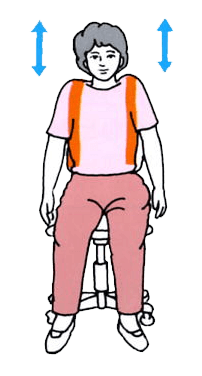
1. Raise and lower your shoulders
Shrug your shoulders and lift them. Contract the muscles for about 3 seconds, then relax and lower your shoulders. Repeat this movement about 5 times. Breathe in as you lift your shoulders and exhale with a "whoosh" sound as you relax (Figure 1).
2. Shoulder rotations
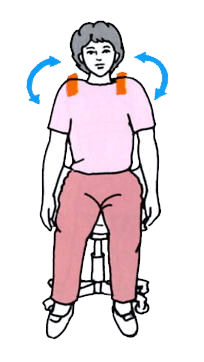
Rotate your shoulder blades in large circles to allow them to move. Do about 5 rotations forward and 5 rotations backward. If you can, place your thumbs on your shoulders and draw large circles in the air with your bent elbows to further improve the movement of your shoulder blades (Figure 2).
3. Head bend
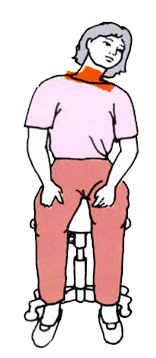
Tilt your head from side to side. Hold the position for a few seconds at a comfortable angle. To increase the stretching effect, use your hands to assist as you tilt your head (Figure 3).
4. Chest and arm stretches
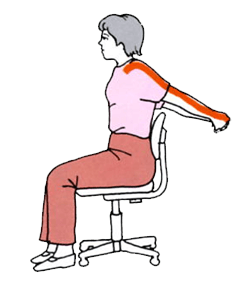
Clasp your hands behind your back, then gradually move your clasped hands away from your body. Hold this stretch for about 30 seconds, feeling a comfortable stretch in your chest and upper arms. Tilting your head upwards will make the stretch even easier (Figure 4).
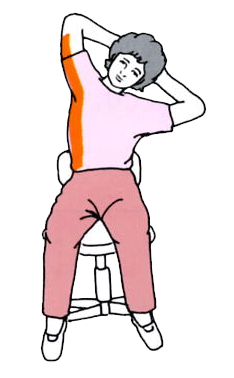
5. Stretch your sides
Clasp your hands behind your head and lean your body to the side. Lean your body forward so that the elbow of the upper arm is higher, and keep it extended for about 30 seconds (Figure 5).
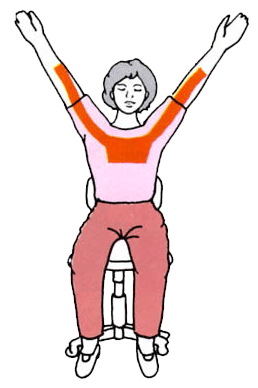
6. Reaching for something beyond your reach
Stretch your arms out to the sides, opening your chest as you stretch. After stretching for a comfortable amount of time, lower your arms and relax. Repeat several times (Figure 6).
The effects of shoulder stiffness exercises
The causes of stiff shoulders vary from person to person. Shoulder stiffness exercises include stretches for all the muscles around the shoulders, so by doing them all, you should be able to find what works best for you. By contracting and relaxing the muscles through shoulder stiffness exercises, you can promote blood flow. After prolonged activities such as working on a computer or doing housework, relax the muscles around your shoulders with shoulder stiffness exercises before stiffness sets in. By incorporating appropriate stretches, shoulder stiffness can be prevented and improved.
About the free email newsletter distribution
We will send you useful health information via email, including updates from the Health and Longevity Network, news on longevity science research findings, and messages from the foundation.

0 Comments